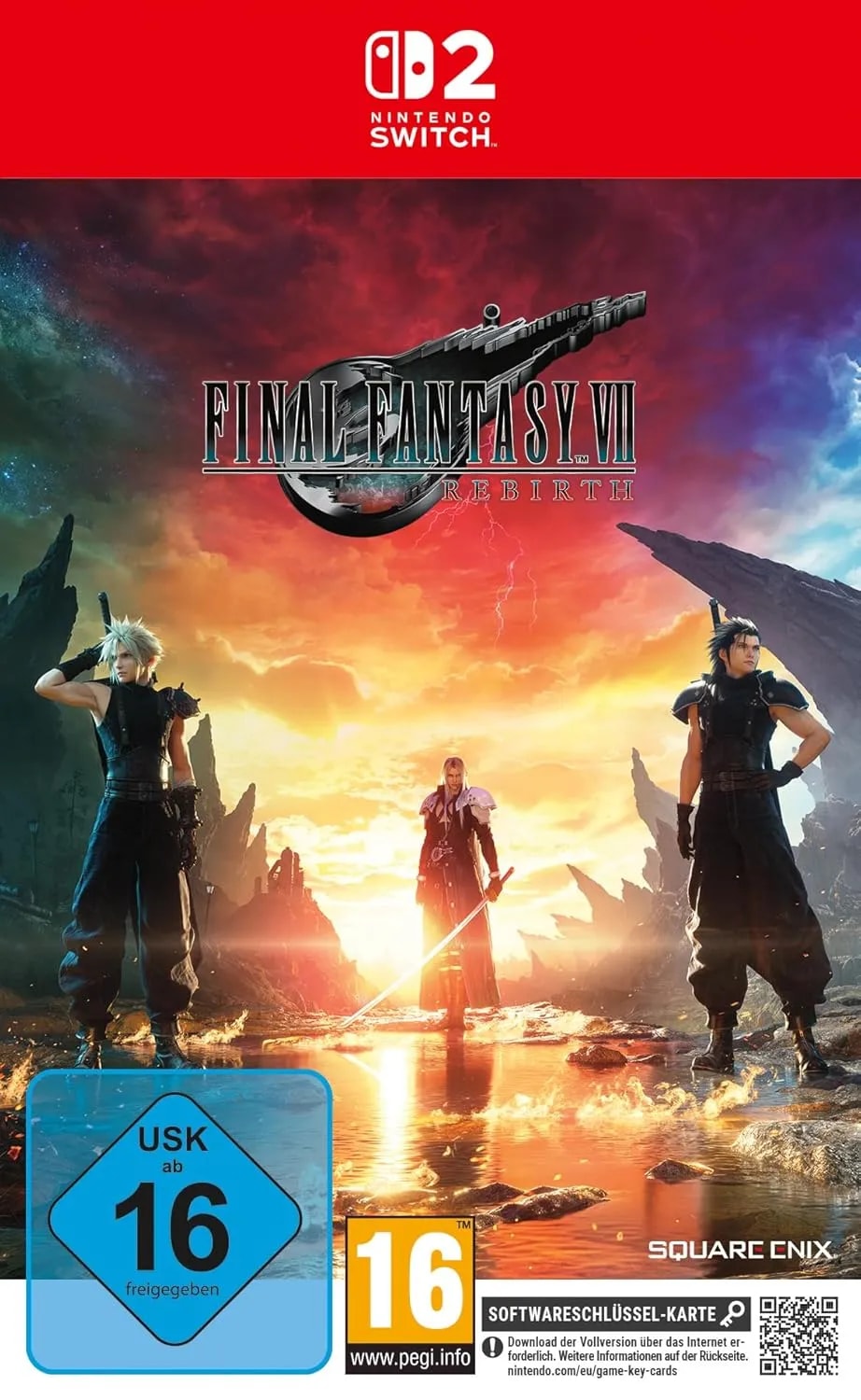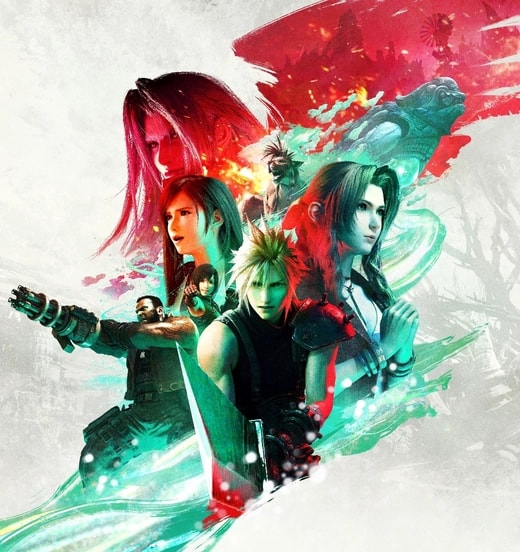

Cloud's hair has always made a statement. In the original 1997 game, it consisted of exactly as many polygons that you barely noticed it. Main Character Modeler Dai Suzuki mentioned during the remake that accurately recreating this hairstyle was its own project, sparking intense internal debates. Three decades and countless polygons later, the blocky guy with the oversized sword has become one of the most detailed video game characters ever.
“Final Fantasy VII Rebirth" is the second part of the remake trilogy in which Square Enix splits and reinterprets the legendary original into three standalone titles. Cloud and his crew leave Midgar to plunge into an adventure filled with continents, biomes, and minigames of such density that you might lose track. We've tested to see if all this works on the Switch 2.
Out of Midgar, into the vast world
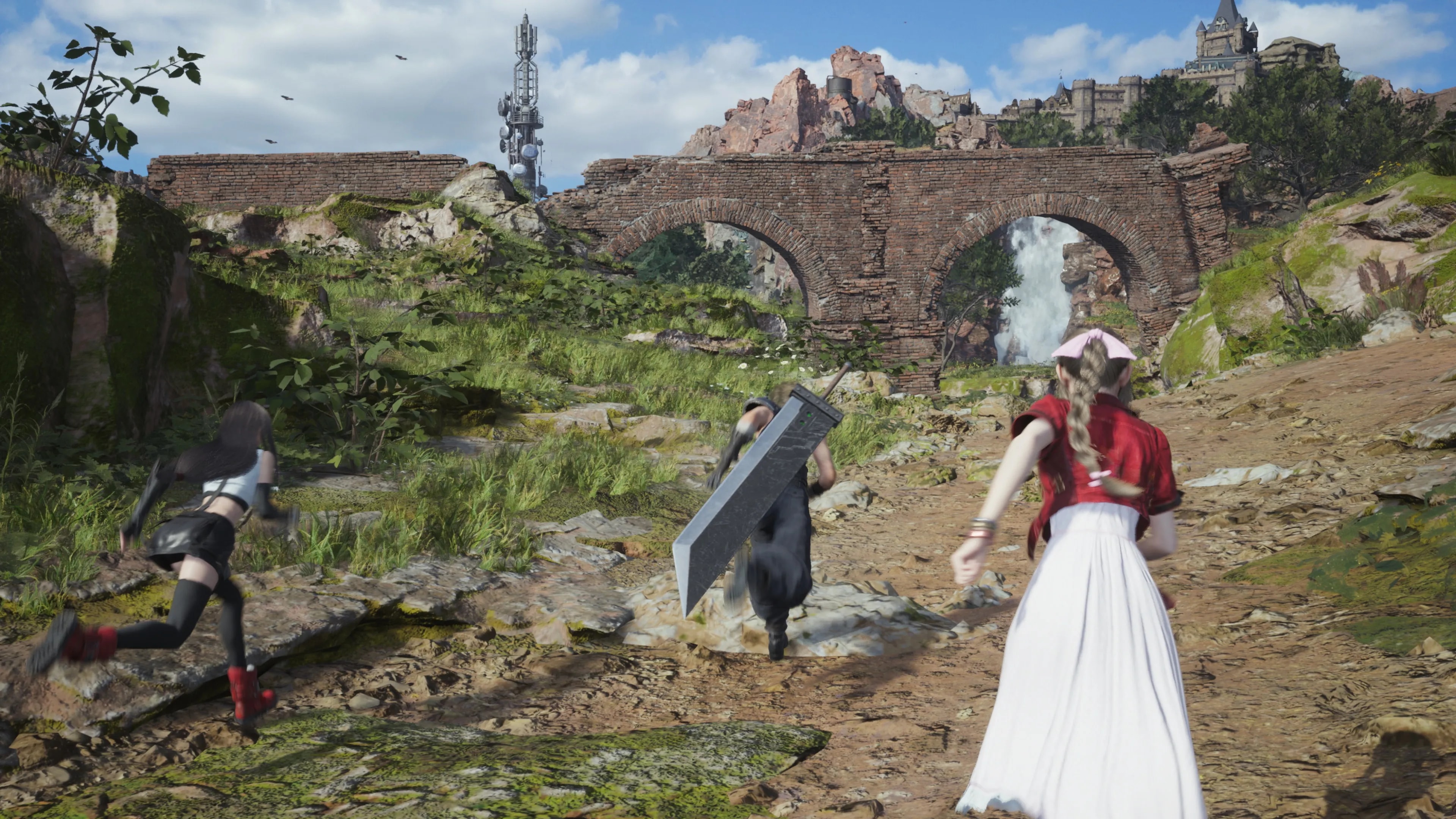
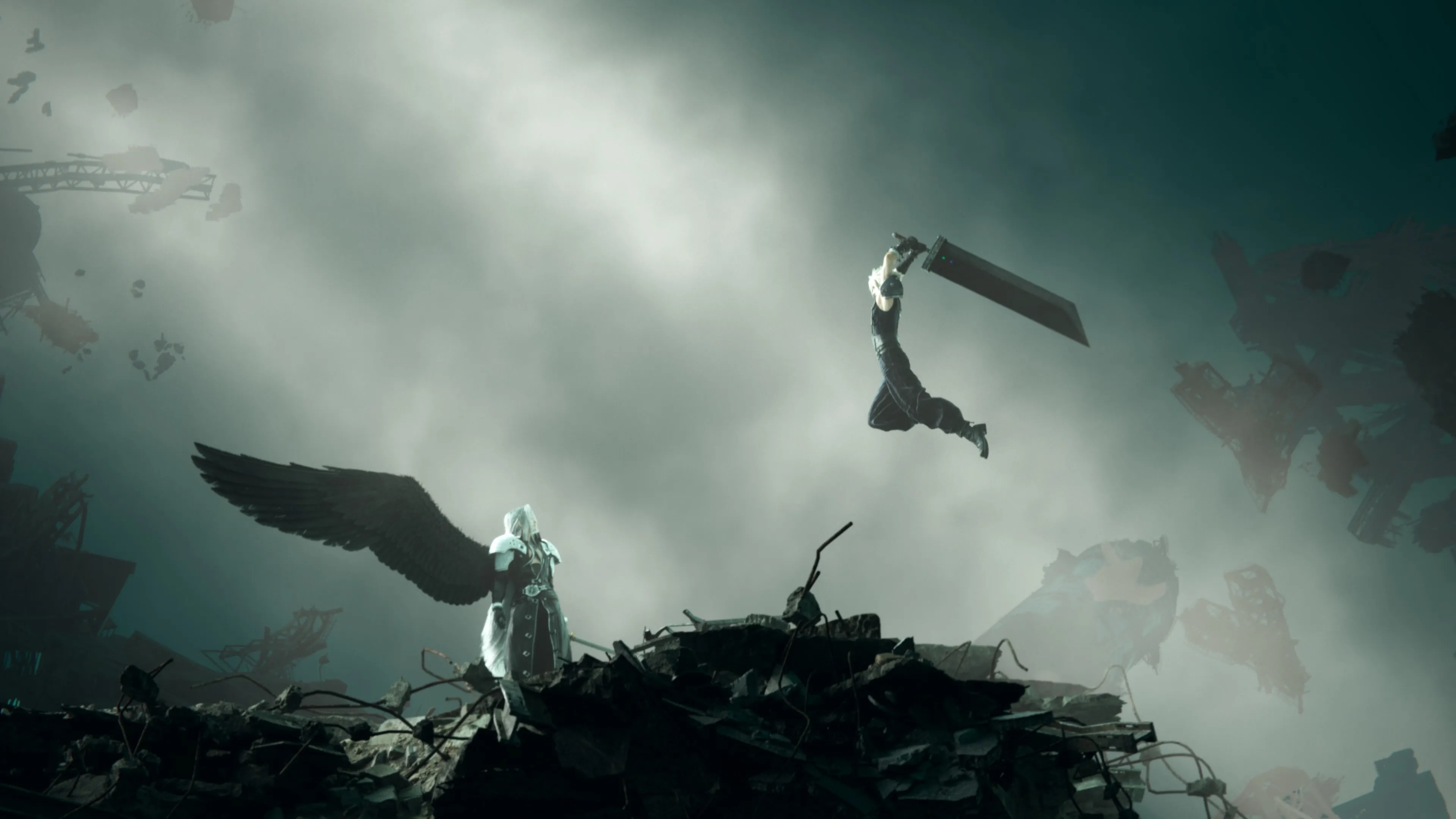
“Final Fantasy VII Rebirth" picks up immediately after its predecessor: Cloud, Aerith, Tifa, Barret, and the rest have left the grim Mako metropolis and are pursuing Sephiroth. That sounds like a clear plan—but it isn’t. Sephiroth has plans far beyond what's expected from a classic video game villain, and the game makes a visible effort to make this threat palpable from the very first minute. The prologue in Nibelheim, a flashback to Cloud's first encounter with Sephiroth, sets the tone for the entire adventure.
What distinguishes “Rebirth" from its predecessor is less the story itself and more how it is told. The world consists of several huge regions, from the grassland area around Midgar to the coastal city of Junon and the golden madness of the Gold Saucer. Between major story moments, a dense network of side quests and character moments unfolds, giving real weight to the ensemble. Fans of the characters from the previous game will get far more from them here than they probably expected.
Old system, new tricks
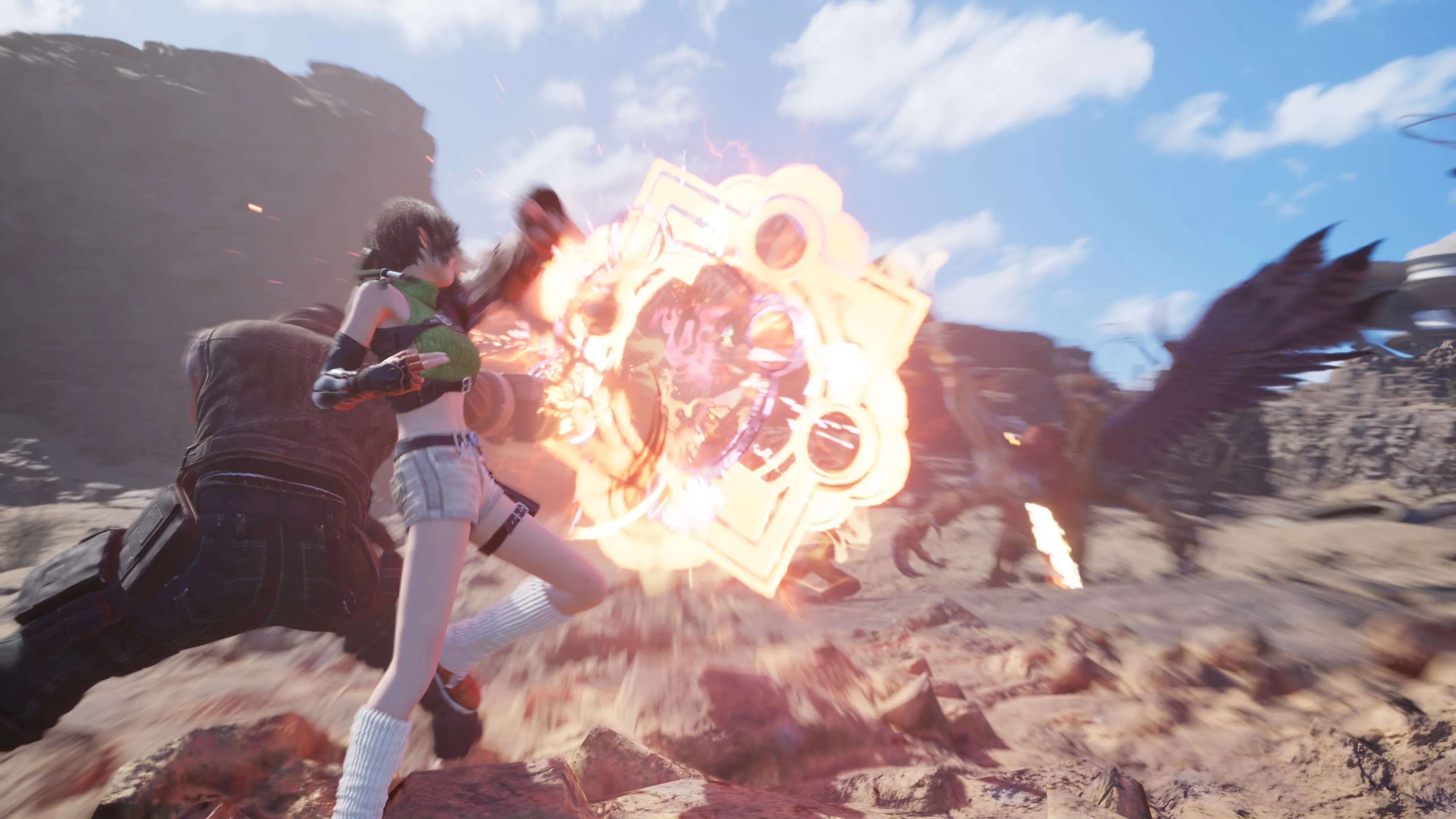
Anyone who played “Final Fantasy VII Remake" will feel right at home with the combat system in “Rebirth," and that is meant as a compliment. Action-based battles, the ATB gauge as a currency for special attacks and magic, Materia in all colors and functions: green for magic, red for summons, blue for support. The basic framework remains—and it’s strong. Newly added are Synchro abilities, where two characters team up for powerful combo attacks. The higher the group level, the more of these attacks become available, and soon you're juggling the ATB bar, the Synchro gauge, and weakness analysis so smoothly that you feel like a very exhausted conductor.
What sets “Rebirth" apart from its predecessor is sheer scope. The open world invites players to spend hours exploring, doing side quests, and playing minigames, with the Gold Saucer alone capable of supporting a standalone game. On the other hand, those who dive into the combat system, optimizing Materia combinations, coordinating Synchro actions, and deliberately staggering enemies, will discover a tactical system with far more depth than the action-packed surface suggests. Both approaches work independently: casual players can simply progress, while optimization enthusiasts have plenty to tinker with for weeks. The game doesn’t force anyone in a particular direction, and that’s exactly what makes the difference.
The game within the game
At some point in “Final Fantasy VII Rebirth," you realize you haven't advanced the main story for two hours. You've participated in Chocobo races, suffered defeat after defeat at the card game Queen’s Blood—and yet you haven't stopped. The Gold Saucer, the glittering amusement park from the 1997 original, has become a full-fledged leisure park in “Rebirth": featuring Chocobo races, a combat arena section, the card game Queen's Blood—which rivals standalone card games in depth—and other attractions that you originally only meant to try briefly. Director Naoki Hamaguchi has mentioned in interviews that the overwhelmingly positive feedback on Queen’s Blood makes future expansions of the game a real possibility.
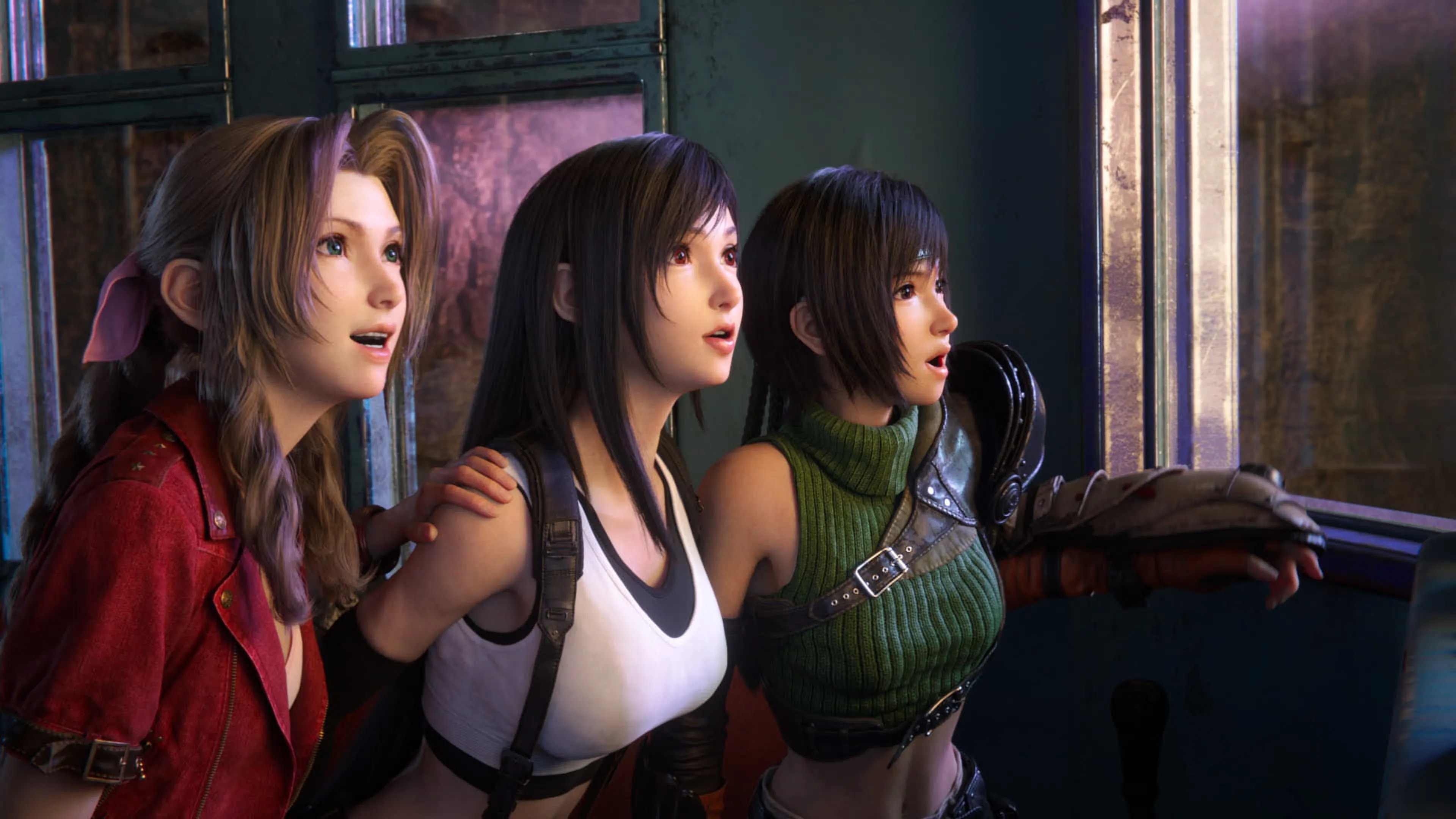
Outside the Gold Saucer, 36 so-called "jack-of-all-trades" missions are scattered across all regions of the game world, and these are far more than mere fetch quests. Each side mission is tied to a companion, and completing them directly affects your bond with that character. Players who invest enough effort can even influence who accompanies Cloud on the legendary Gold Saucer date in chapter 12. This may sound like a footnote, but it serves as a genuine motivational system throughout the game. You complete tasks not just for rewards—you do it because you want Tifa or Aerith or Barret to smile kindly at you.
DLSS saves the day
The crucial question for any major port on the Switch 2 isn't whether compromises were made; it's whether those compromises ruin the gameplay experience. For “Final Fantasy VII Rebirth," the answer is no—but honesty is owed. Square Enix did some real technical work: models were re-optimized, detail levels overhauled from scratch, and DLSS was consistently used to produce an acceptable image from an internal resolution of up to 756p in handheld mode. In docked mode, the game scales up to 1080p, and unless you're obsessively scrutinizing image sharpness, you'll likely have no problems.
Occasionally annoying are frame rate fluctuations in open areas, where the game sometimes can't maintain the targeted 30 frames per second and occasionally drops significantly below. There is also noticeable pop-in of background objects, which Square Enix couldn't completely eliminate despite extensive optimization work. In battles—where it really matters—the game runs stable enough to fully enjoy the combat system. Overall, the Switch 2 version is a technical feat with a few visible seams.
Uematsu sends his regards
Those who grew up with the 1997 original will regularly fall into a nostalgia trap in “Rebirth," and that's strictly a compliment. Nobuo Uematsu, who composed the entire soundtrack solo back then, returns with the title song “No Promises to Keep," supported by a team of more than a dozen composers. Familiar themes reappear in new forms, new pieces fit seamlessly into the soundscape, and at some point, you find yourself riding through a meadow just listening to the music.
The German voice acting is fully available, featuring the same cast as “Final Fantasy VII Remake." Felix Mayer as Cloud and Florian Hoffmann as Sephiroth are the most recognizable voices in the ensemble, which is intended to remain consistent throughout the trilogy. Players who experienced the predecessor in German will feel right at home. Those who prefer Japanese or English can choose those options as well—the game offers all three.
Eingebundene Inhalte externer Webseiten werden nicht ohne deine Zustimmung automatisch geladen und dargestellt.
Durch Aktivieren der externen Inhalte erklärst du dich damit einverstanden, dass personenbezogene Daten an Drittplattformen übermittelt werden können.
Mehr Informationen findest du in unseren Datenschutzbestimmungen.
Summary
Technical concessions? Present, noted, checked off. What remains is one of the densest, most emotional, and most satisfying role-playing games in years—now finally also on the Switch 2. Square Enix didn't simply deliver a port; they forced an experience onto hardware that really shouldn't have had a chance—and it works. “Final Fantasy VII Rebirth" is the must-have game on the Switch 2 that fans have been waiting for since the very first trailer. If you haven't started yet, you have no excuse now.
More info